
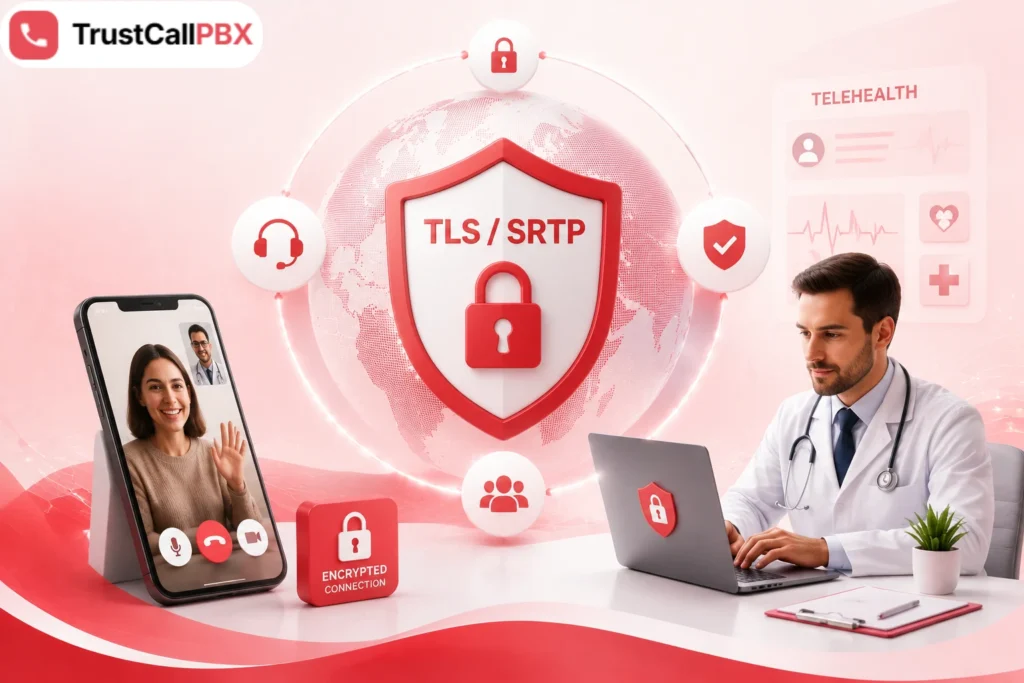
Telehealth has moved from being an emergency-era workaround to a permanent part of how healthcare is delivered. Patients now routinely expect to consult with doctors, therapists, and specialists over the phone or video sometimes across borders, particularly for second opinions, specialist consultations, or healthcare providers serving expatriate or international patient populations.
But healthcare communication carries a responsibility that most other business calls don’t: the information discussed is often deeply personal, legally protected, and potentially harmful if exposed. This is where the difference between standard VoIP and encrypted VoIP specifically, VoIP using TLS and SRTP encryption becomes not just a technical detail, but a fundamental requirement.
What Makes Healthcare Communication Different
When a patient calls their doctor to discuss symptoms, test results, medication, or mental health concerns, that conversation contains what’s broadly categorized as protected health information (PHI) or, depending on jurisdiction, similar categories of sensitive personal data.
Unlike a sales call or a customer support inquiry, a healthcare conversation that’s intercepted, recorded without authorization, or exposed could have serious consequences for patient privacy, for the provider’s legal standing, and for the trust patients place in their healthcare providers generally.
This is why healthcare communication infrastructure is typically held to a higher standard than general business communication and why “good enough” VoIP for a sales team isn’t automatically “good enough” for a telehealth provider.
TLS and SRTP: What They Actually Do
To understand why these matter, it helps to understand what’s actually happening when a VoIP call takes place.
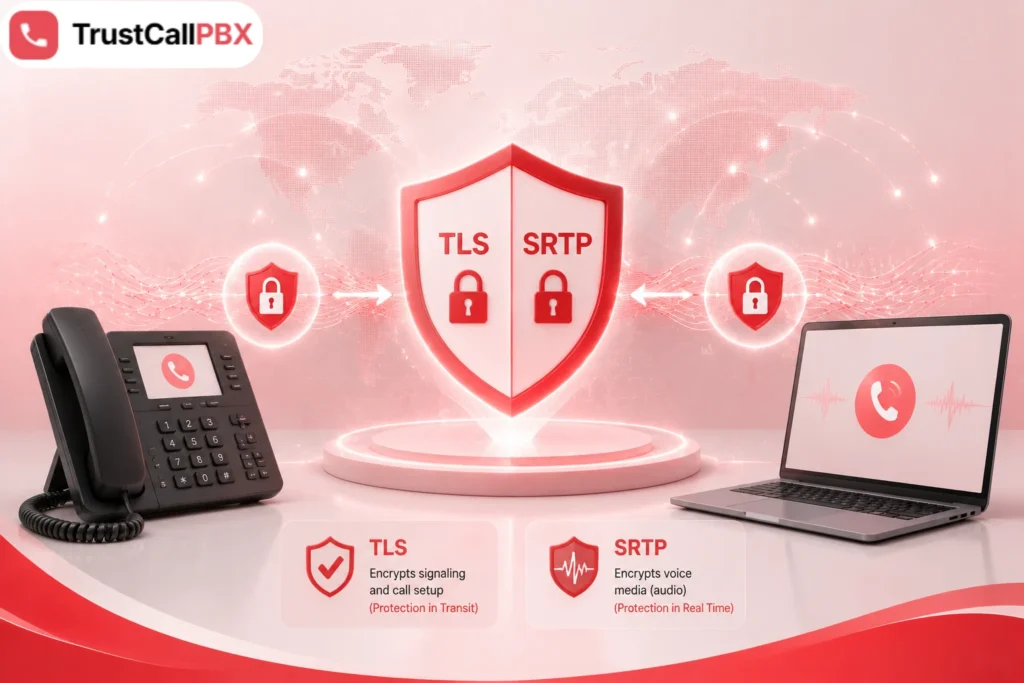
A VoIP call involves two main types of data traveling over the internet: signaling (the information that sets up, manages, and ends the call essentially the “handshake” between devices) and media (the actual audio of the conversation).
TLS (Transport Layer Security) encrypts the signaling traffic. Without TLS, call setup information including details like who’s calling whom, when, and other metadata travels in a form that could potentially be intercepted and read by anyone positioned to observe that traffic.
SRTP (Secure Real-time Transport Protocol) encrypts the media traffic the actual voice audio of the call. Without SRTP, the audio content of a call could, in theory, be intercepted and listened to by someone with access to the network path the call travels through.
Together, TLS and SRTP mean that both the “metadata” of a call (who’s calling, when, call setup details) and the actual content (the conversation itself) are encrypted in transit significantly reducing the risk of interception or eavesdropping.
Why This Matters Specifically for Telehealth
For a telehealth provider, every consultation call potentially contains information that, in many jurisdictions, is subject to specific legal protections healthcare privacy regulations that govern how patient information must be handled, stored, and transmitted.
Using VoIP infrastructure without proper encryption for these calls creates a gap between the privacy protections patients reasonably expect (and that regulations may require) and the actual technical reality of how their conversation is being transmitted.
This isn’t a theoretical concern. As healthcare providers increasingly rely on phone and video consultations sometimes with patients calling from one country to providers in another, or providers operating telehealth services across multiple countries the communication infrastructure becomes a core part of the provider’s compliance posture, not just a back-office utility.
Beyond Encryption: Other Considerations for Healthcare VoIP
While TLS/SRTP encryption is foundational, healthcare providers evaluating VoIP infrastructure should consider several related factors:
Call Recording and Consent
Many telehealth providers record consultations for clinical documentation purposes. If calls are recorded, the recordings themselves need to be stored securely, with appropriate access controls encryption in transit doesn’t help if recordings are then stored insecurely. Providers should understand exactly how (and where) any call recordings are stored, and ensure this aligns with their data handling policies and any applicable regulations.
Access Controls and Audit Trails
Healthcare organizations often need to demonstrate who had access to what information and when both for internal governance and in case of any incident requiring investigation. VoIP platforms that provide detailed CDR (Call Detail Records) and access logs support this kind of auditability.
Data Residency Considerations
Depending on the jurisdictions a healthcare provider operates in, there may be requirements or strong preferences around where data is processed or stored. While this is often more relevant to data storage systems than to call routing infrastructure itself, it’s worth understanding how a VoIP provider’s infrastructure is architected, particularly for providers operating across multiple countries with different regulatory environments.
Reliability for Clinical Use
A dropped call during a clinical consultation isn’t just an inconvenience it can interrupt important information exchange between a provider and patient, potentially affecting care quality. Healthcare VoIP infrastructure should be held to high reliability standards, with attention to uptime guarantees and call quality (HD audio matters for clinical conversations, where misheard details about symptoms, dosages, or instructions could have real consequences).
International Telehealth: A Growing Use Case
An increasingly common scenario involves healthcare providers offering consultations to patients located in different countries for example, a specialist clinic offering second-opinion consultations to international patients, or providers serving expatriate communities who prefer to consult with doctors from their home country.
For these scenarios, local DID numbers become relevant in a healthcare context too a clinic serving patients in the UK might want a UK-based number for patients to call, even if the actual consultation happens via video or a different channel, simply because patients are more comfortable calling (and more likely to actually call) a number that looks local.
Combined with TLS/SRTP encryption, this allows international telehealth providers to offer what feels like a local, trustworthy point of contact, backed by communication infrastructure that meets the privacy expectations appropriate for healthcare conversations regardless of where the provider’s actual operations are based.
What Healthcare Providers Should Ask Their VoIP Provider
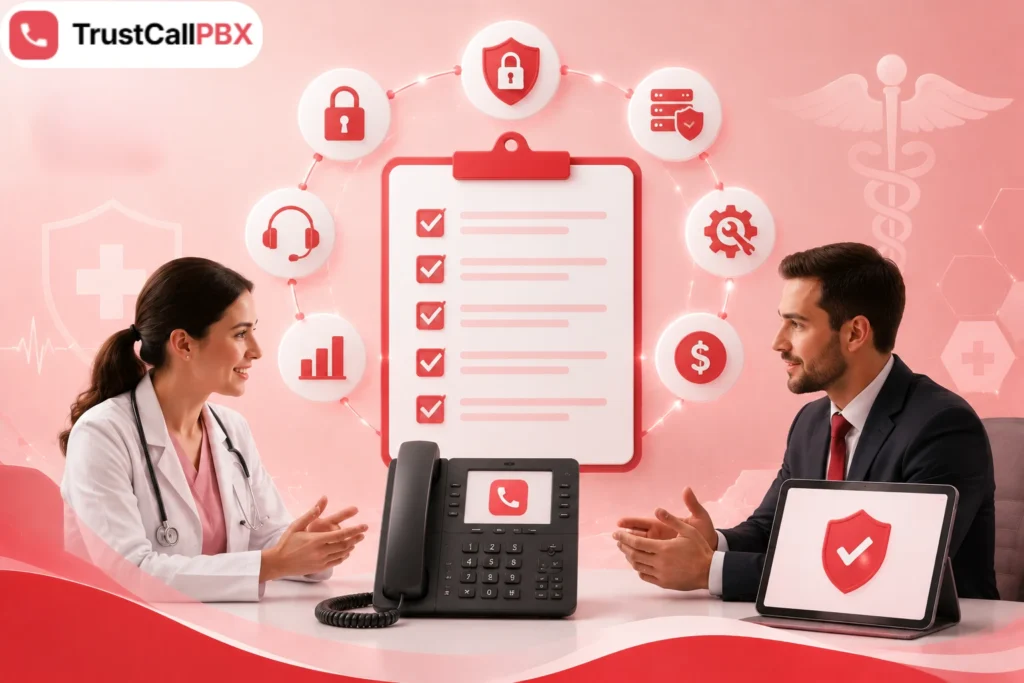
When evaluating or auditing VoIP infrastructure for telehealth use, healthcare organizations should be asking specific questions:
- Is TLS used for all signaling traffic, by default, across all call types? Not just “available” but actually configured and enforced.
- Is SRTP used for media encryption on all calls, including international calls? Encryption that’s only applied to some call types creates gaps.
- How are call recordings stored, and what access controls apply to them?
- What does the provider’s infrastructure look like in terms of redundancy and uptime what happens if there’s an outage during a consultation?
- What CDR and reporting capabilities exist for audit and compliance purposes?
The Cost of Getting This Wrong
It’s worth being direct about why this matters beyond abstract compliance concerns. A healthcare provider that experiences a privacy incident related to unencrypted communication faces multiple consequences: potential regulatory penalties (depending on jurisdiction and the nature of the incident), reputational damage that can be severe in an industry built on trust, and in some cases, direct harm to patients whose sensitive information was exposed.
Compared against these risks, the incremental cost (if any) of choosing VoIP infrastructure that properly implements TLS/SRTP encryption is minimal. For healthcare providers, this isn’t an area where “good enough for now” is an acceptable standard it’s foundational infrastructure that needs to be right from the start.
A Note for Healthcare-Adjacent Businesses
It’s worth noting that “healthcare” in this context extends beyond hospitals and clinics. Health insurance companies handling claims-related calls, pharmaceutical companies fielding patient inquiries, mental health platforms, telehealth startups, medical billing services, and health-tech companies more broadly all handle conversations that may include sensitive health-related information and the same encryption considerations apply.
Any business where phone conversations might reasonably include health information even incidentally should evaluate their communication infrastructure with the same scrutiny as a traditional healthcare provider would.
Bringing It Together
Telehealth represents one of the most meaningful applications of modern communication technology connecting patients with care, regardless of geography, often making healthcare more accessible than it’s ever been. But this accessibility comes with a responsibility to protect the privacy of what are often deeply personal conversations.
TLS and SRTP encryption aren’t exotic, expensive add-ons they’re standard features of properly configured modern VoIP infrastructure. For healthcare providers, the question isn’t whether this level of encryption is “worth it.” It’s whether the communication infrastructure they’re using today actually has it enabled, consistently, across all calls and if there’s any doubt about that answer, it’s worth finding out before it becomes a problem rather than after.